Calories in apricot fool
1 tall stemmed glass (230 g) has about 554 kcal and 3.5 g protein.
554
kcal in 1 tall stemmed glass · 230 g
- Protein
- 3.5 g
- Carbs
- 77 g
- Fat
- 26 g
The recipe already has its own oil. Add only what your version has on top.
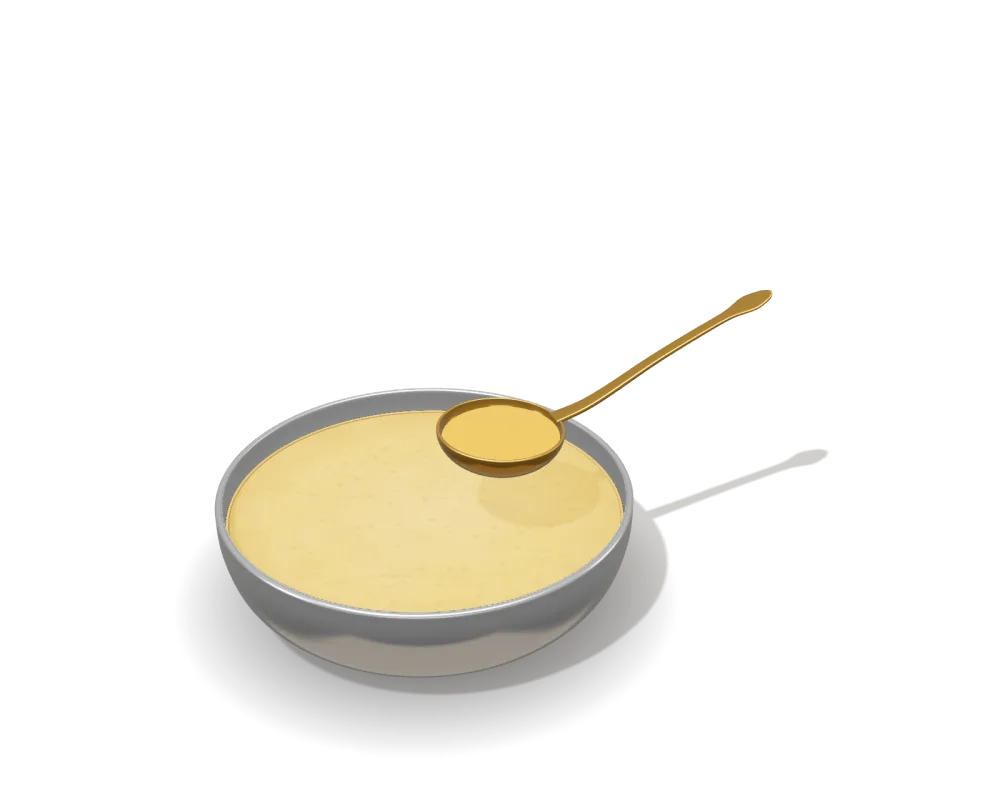
One teaspoon of ghee adds 45 kcal to this tall stemmed glass: 8% more than the apricot fool itself.
Nutrition in apricot fool
| Nutrient | Per 100 g | Per 1 tall stemmed glass |
|---|---|---|
| Calories | 241 kcal | 554 kcal |
| Protein | 1.5 g | 3.5 g |
| Carbohydrate | 34 g | 77 g |
| Fat | 11 g | 26 g |
| Fibre | 1.0 g | 2.3 g |
| Sugars | 21 g | 49 g |
| Sodium | 8 mg | 19 mg |
Before any extra oil or ghee. Source: INDB recipe (Vijayakumar et al. 2024), cooking-water corrected by Satis, checked 2026-11-21. Published values for this dish vary, so treat the number as a good starting point.
Where its calories come from
0.6 g protein in every 100 kcal
How apricot fool compares with other sweets and desserts
241
kcal in 100 g of apricot fool
129th
lightest per 100 g of 259 sweets and desserts
250th
for protein per calorie of the 259
Lighter sweets and desserts
- Sheer khurma168 kcal / 100 g
- Split bengal gram sweet rice190 kcal / 100 g
- Shahi tukre190 kcal / 100 g
Sweets and desserts with more protein
- Sheer khurma2.8 g / 100 kcal
- Hot fish souffle7.8 g / 100 kcal
- Fish pie7.7 g / 100 kcal
Foods like apricot fool
- Honey21 kcal · 1 tsp
- Sheer khurma336 kcal · 1 bowl
- Sugar15 kcal · 1 tsp
- Chocochip ice cream483 kcal · 1 ice cream cup
All sweets and dessertsCalorie deficit calculatorWhy oil and ghee matter
Apricot fool questions
- How many calories are in 1 tall stemmed glass of apricot fool?
- About 555 kcal for 1 tall stemmed glass (230 g), with 3.5 g protein, 77 g carbs and 26 g fat.
- How many calories are in 100 g of apricot fool?
- 241 kcal per 100 g, with 1.5 g protein.
- Is apricot fool high in protein?
- Not much: 0.6 g of protein per 100 kcal. It's mostly carbohydrate energy, so the protein has to come from the rest of the meal.
- Is apricot fool good for weight loss?
- Weight loss comes from the day's total, so apricot fool works when the rest of the day leaves room for it. Of 259 sweets and desserts on Satis, it ranks 129th lowest in calories per 100 g and 250th for protein per 100 kcal.
Log apricot fool the way you'd say it
Type “2 roti, 1 katori dal” and Satis counts it with your katori size and the ghee your kitchen uses. Free in the iPhone beta.
Values per 100 g come from INDB recipe (Vijayakumar et al. 2024), cooking-water corrected by Satis (row indb:BFP372). A katori is taken as 150 g, and one teaspoon of oil or ghee as 5 g, or about 45 kcal. Read how Satis counts Indian food. This is general information, not medical advice; see the health disclaimer.