Calories in deviled egg
1 egg (160 g) has about 158 kcal and 8.0 g protein.
158
kcal in 1 egg · 160 g
- Protein
- 8.0 g
- Carbs
- 3.5 g
- Fat
- 12 g
The recipe already has its own oil. Add only what your version has on top.
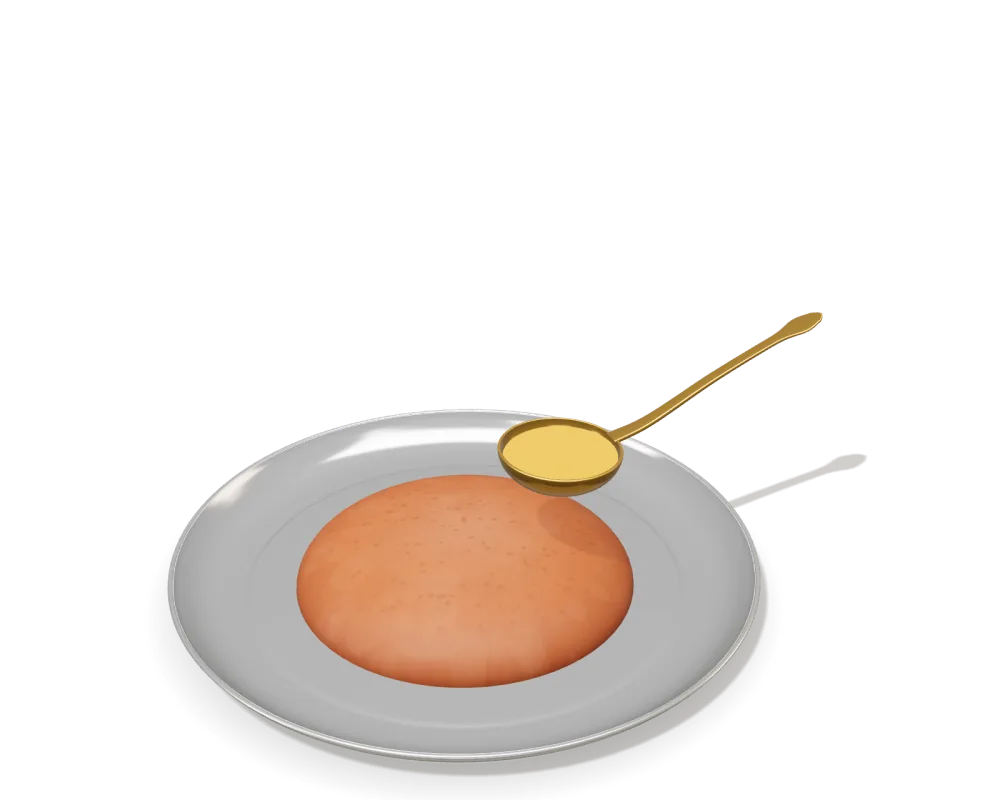
One teaspoon of ghee adds 45 kcal to this egg: 29% more than the deviled egg itself.
Nutrition in deviled egg
| Nutrient | Per 100 g | Per 1 egg |
|---|---|---|
| Calories | 99 kcal | 158 kcal |
| Protein | 5.0 g | 8.0 g |
| Carbohydrate | 2.2 g | 3.5 g |
| Fat | 7.7 g | 12 g |
| Fibre | 1.2 g | 1.9 g |
| Sugars | 0.8 g | 1.3 g |
| Sodium | 117 mg | 188 mg |
Before any extra oil or ghee. Source: INDB recipe (Vijayakumar et al. 2024), cooking-water corrected by Satis, checked 2026-11-21. Published values for this dish vary, so treat the number as a good starting point.
Where its calories come from
5.1 g protein in every 100 kcal
How deviled egg compares with other eggs, meat and fish
99
kcal in 100 g of deviled egg
7th
lightest per 100 g of 81 eggs, meat and fish
65th
for protein per calorie of the 81
Lighter eggs, meat and fish
- Chicken stock30 kcal / 100 g
- Meat stock25 kcal / 100 g
Eggs, meat and fish with more protein
- Prawns, cooked24 g / 100 kcal
- Chicken breast, cooked19 g / 100 kcal
- Chicken thigh, cooked14 g / 100 kcal
Foods like deviled egg
- Prawns, cooked119 kcal · 1 katori
- Machher jhol240 kcal · 1 bowl
- Chicken balti (restaurant)516 kcal · 1 portion
- Chicken bhuna (home)262 kcal · 1 bowl
All eggs, meat and fishCalorie deficit calculatorWhy oil and ghee matter
Deviled egg questions
- How many calories are in 1 egg of deviled egg?
- About 160 kcal for 1 egg (160 g), with 8.0 g protein, 3.5 g carbs and 12 g fat.
- How many calories are in 100 g of deviled egg?
- 99 kcal per 100 g, with 5.0 g protein.
- Is deviled egg high in protein?
- It's moderate: 5.1 g of protein per 100 kcal. Pair it with curd, paneer, eggs, dal or chicken if you want more.
- How much does a teaspoon of ghee or oil add to deviled egg?
- About 45 kcal per teaspoon (5 g). Use the slider above to add what went into your version.
- Is deviled egg good for weight loss?
- Weight loss comes from the day's total, so deviled egg works when the rest of the day leaves room for it. Of 81 eggs, meat and fish on Satis, it ranks 7th lowest in calories per 100 g and 65th for protein per 100 kcal.
Log deviled egg the way you'd say it
Type “2 roti, 1 katori dal” and Satis counts it with your katori size and the ghee your kitchen uses. Free in the iPhone beta.
Values per 100 g come from INDB recipe (Vijayakumar et al. 2024), cooking-water corrected by Satis (row indb:ASC256). A katori is taken as 150 g, and one teaspoon of oil or ghee as 5 g, or about 45 kcal. Read how Satis counts Indian food. This is general information, not medical advice; see the health disclaimer.